You're already doing this
You watch Korean videos and shows anyway, and you've picked up words without trying. Hearing a word in a real moment is why it stuck.
다리 dari means bridge.
Tap any word in a scene to see what it means and why it's said that way. Save the words you want, and review them later with the clip they came from.
For iPhone. The phone here works: tap a word and try it.
Textbook Korean is careful and slow, and it sounds nothing like what you hear. These are people packing for a day out, catching a bus to work and cooling off by a creek.
DARI cuts videos into short clips and puts them in a feed. Swipe to the next one whenever you like.

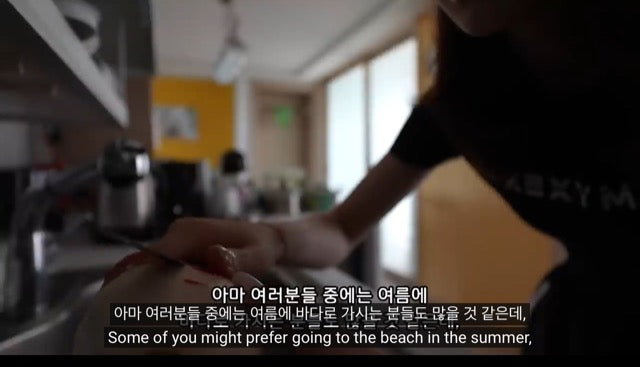
A translation tells you what the line says. It doesn't show you which word did what, and that's the part you need to learn.
Tap a word and the clip pauses. You get:
I packed some cold ice water and peaches.
A word on a blank flashcard is easy to forget. A word you heard someone say beside a creek is harder to lose.
Every word you save becomes a card with its scene and sentence. Spaced repetition brings it back right before you'd forget it, and you can track each word from New to Learned.
You watch Korean videos and shows anyway, and you've picked up words without trying. Hearing a word in a real moment is why it stuck.
So you tried to learn properly. Word lists, fake dialogues and lessons you'd never use. If you stopped, that was the method failing, not you.
Keep watching, and let every word on screen be something you can tap. That's why it's called 다리. It gets you from the Korean you hear to the Korean you know.
Nothing gets in the way of the clip you're watching.
Romanization sits small underneath, and you can turn it off.
Words and progress are saved to your account, so they move to any phone.
Yes, if you can see how each line works and come back to the words later. DARI gives you both: tap to understand a line, then review what you saved.
No. Romanization and an English translation sit with the Korean subtitles, so you can start before you read Hangul. Turn them off when you're ready.
Beginners up to intermediate learners preparing for TOPIK. You tell DARI how much you catch without subtitles, and that decides which scenes come up most.
Real Korean videos, played in YouTube's own player and credited in the app. Right now they come from Didi의 한국문화 Podcast and Bubbly버블리, both shared under a Creative Commons licence.
The yearly plan starts with 7 days free, then costs US$39.99 a year. The monthly plan is US$7.99 a month. Prices can differ by country, and the app shows yours before you pay. You can cancel any time in your Apple ID settings.
Not right now. DARI is for iPhone.
We're getting it ready for the App Store. Real Korean clips, tappable subtitles and flashcards, all on your iPhone.